
The World of Hummingbirds: Nature’s Tiny Powerhouses
Introduction: Jewels in Motion
Few sights are as dazzling as a hummingbird in flight. Their wings beat up to 80 times per second, blurring into invisible motion. These tiny dynamos hover like helicopters, dart backward like drones, and flash iridescent colors that shift with every light change. Found only in the Americas, over 300 hummingbird species brighten landscapes from the Arctic Circle to Patagonia.
Each species has a distinct flair. Some gleam emerald green, others shimmer ruby or violet. Their high-energy diet of nectar fuels their incredible speed. Insects provide vital protein for growth and feather care. Watching one hover over a flower is like witnessing nature’s most efficient flying machine at work—small, powerful, and endlessly captivating.
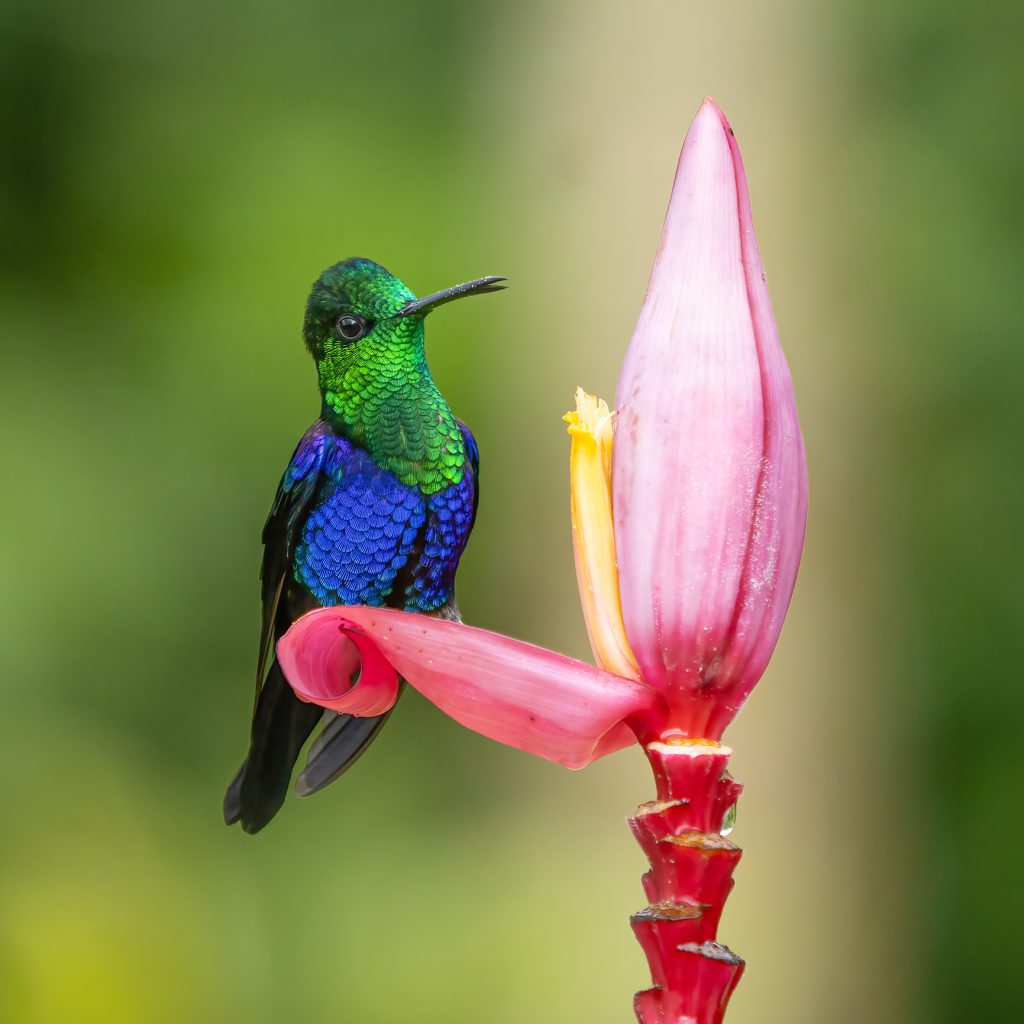
Desert Hummingbirds : Tiny Travelers of the Desert
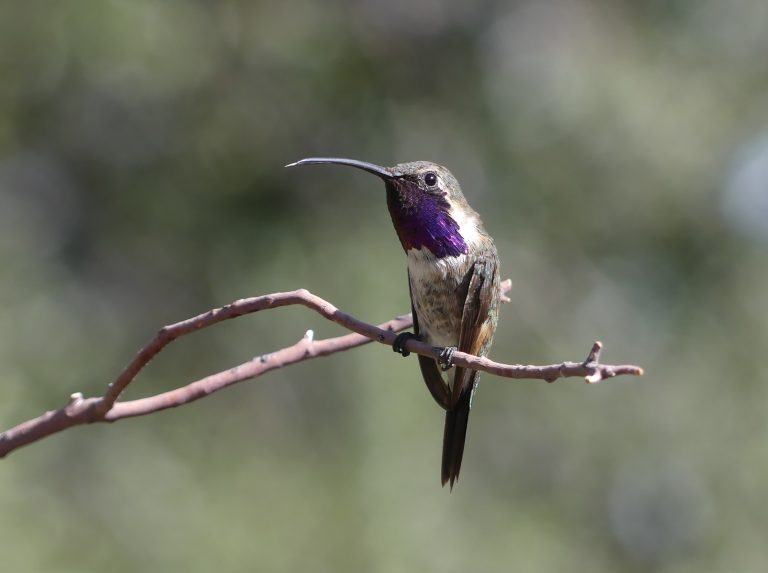
Desert hummingbirds are small, energetic specialists perfectly adapted to the sunbaked landscapes of the Southwest. Species like Costa’s, Black-chinned, Lucifer’s, and Calliope Hummingbirds bring dazzling color to even the harshest deserts. The Costa’s male flashes a brilliant violet crown and throat by flying back and forth with gorget extended. The Black-chinned shows an elegant dark bib that glimmers in sunlight. The Lucifer’s Hummingbird, with its curved bill and magenta gorget, favors arid canyons. The tiny Calliope travels thousands of miles each year from Mexico to the northern Rockies. All feed on nectar from desert blooms like ocotillo and chuparosa, often visiting feeders during migration. Fun fact: At night they enter a deep sleep state called torpor to conserve energy. These desert jewels prove that even in the toughest terrain, beauty thrives on the wing.

Hummingbird Extremes: From the Bee to the Giant
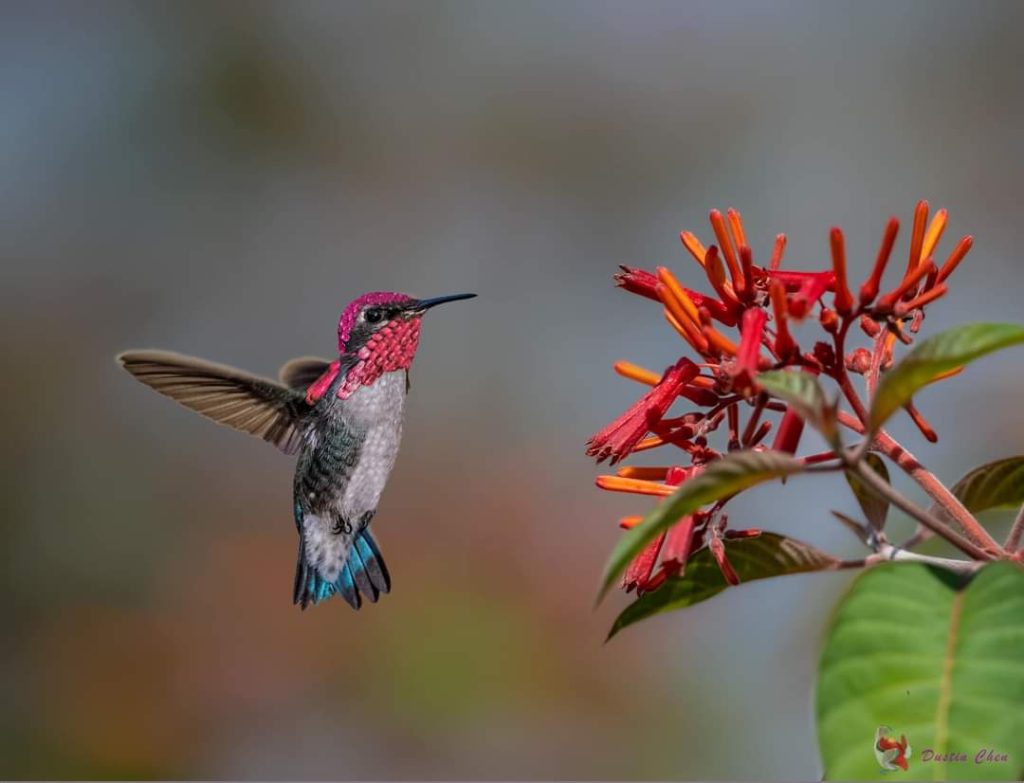
The Bee Hummingbird of Cuba is not just the world’s smallest hummingbird, but the world’s smallest bird. It measures just two inches long and weighs less than two grams. Males shimmer with bright red and blue plumage, flashing like flying gems over tropical flowers. Despite their tiny size, they can beat their wings up to 80 times per second. On the other end of the scale, the Giant Hummingbird of the Andes is the world’s largest stretching up to nine inches long and weighing in at 18 – 24 ounces. It ranges from Ecuador to Chile, often seen hovering near high-altitude blooms. Unlike smaller species, it beats its wings only 10–15 times per second sounding more like a purring cat. Fun fact: the Bee Hummingbird’s small size is due to co-evolution with smaller flowers on the island of Cuba. The Giant Hummingbird’s size is based on the high altitude habitat. The adaptation meets the physiological demands of thinning air. Together, they show the stunning extremes of hummingbird evolution—from miniature marvels to mountain giants.
From Swords to Sylphs: The Diversity of Hummingbirds
Hummingbirds showcase remarkable physical adaptations perfectly suited to their specialized lifestyles. The Sword-billed Hummingbird stands out with a bill longer than its entire body. This allows it to feed from deep tubular flowers other birds can’t reach, reducing competition. The Racket-tailed Hummingbird uses its distinctive paddle-shaped tail feathers for aerial displays and agility in dense forests. Meanwhile, the Long-tailed Sylph dazzles with shimmering green plumage and tail feathers twice its body length. They use these tail features for balance and courtship. These birds also have wings that rotate in full circles, enabling them to hover with precision. Fun fact: their tongues can flick up to 15 times per second to draw nectar efficiently. Together, these species highlight how evolution has shaped hummingbirds into some of the world’s most extraordinary fliers and pollinators.
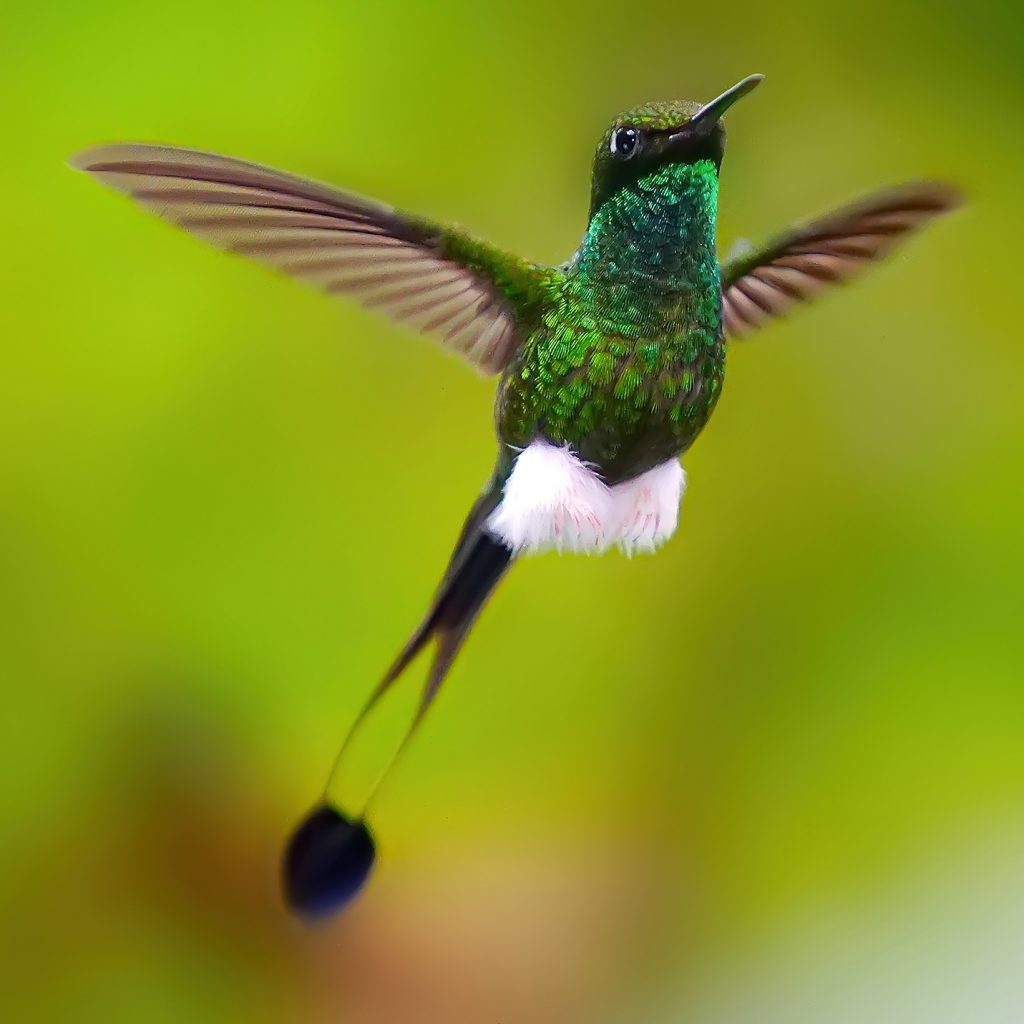
The greatest hummingbird diversity thrives in the lush tropics of Central and South America. In the Andes alone, more than 150 species glitter like living rainbows across misty mountain slopes. From the sword-billed hummingbird—whose beak is longer than its body—to the fiery-topaz, which glows like molten copper. Each species has evolved to match a specific flower and ecosystem. These tropical regions are the ultimate hummingbird paradise, where every valley seems to host a new shape, color, or call. Exploring these forests feels like stepping into a moving jewel box, each fluttering wingbeat a reminder of nature’s boundless adaptability.
Helping Hummingbirds Thrive: What You Can Do
Hummingbirds are essential pollinators, carrying pollen between flowers as they feed. Unfortunately, habitat loss and climate change threaten their numbers. You can help by planting native flowers—penstemon, salvia, and trumpet vine are favorites.
Feeders also make a difference! Keep them clean, filled with a mixture of four parts water to one part sugar. No dyes please, it can harm the little birds. Wash feeders weekly in warm water and refill often, especially in summer heat.
Want to help further? Share your photos and sightings! Facebook communities and birding pages such as eBird.org like these beautiful hummingbird photos which raise awareness and connect birders around the world.
Tiny Travelers, Big Magic
From the tip of South America to the Arctic, hummingbirds link three continents in a ribbon of color and motion. Every hum, dive, and flash of light tells a story of endurance, speed, and grace.
They remind us that size doesn’t limit strength—and that the smallest wings can carry the biggest dreams. So grab your binoculars, find a patch of flowers, and listen for that soft electric buzz. The next time a hummingbird zips by, you’ll know you’ve met one of nature’s greatest miracles in motion.